
菜单
关闭


|



Soar Group are the gas and liquid fired power plants EPC supplier in the world. We have rich experience in Power Plant design and Construction. To provide you with professional, fast, efficient and flexible solutions for power plant selection, design, construction, and maintenance.
1. Capacity of Power Plants:
Power station capacity, also known as installed capacity, refers to the total active power that all generator sets in a power plant can continuously output under rated conditions. It is a core indicator that characterizes the scale of power plant construction and power production capacity. The commonly used units of measurement for power plant capacity are kilowatts (kW), Megawatts (MW), or Gigawatts (GW). A large power plant has a large capacity and generates more electricity (kWh).
Determining the type of power station requires consideration of multiple factors, among which the most critical is the load factor. We should determine the capacity of the power station based on its purpose and actual load. The correct selection of the power type of the main device is a key element.
1.1 Factors affecting power plants capacity:
■ Resource Conditions: Thermal power plants are affected by the type, quality, and supply of fuel; Hydropower plants are limited by river flow and reservoir water levels; Wind power plants rely on wind speed and wind energy density; The photovoltaic power plants depends on the local solar radiation level.
■ Load Demand: It is necessary to consider peak load and reserve capacity demand at different time periods (to cope with future load growth), and determine the total installed capacity of the power plant according to a redundancy factor of 1.2-1.5 times, matching the configuration scheme of single set power and quantity.
■ Technology and Economy: Constrained by equipment selection, construction costs, and operational efficiency, a balance needs to be struck between safety and economy.
1.2 Determination of Power plants capacity:
■ Net Power Output, also known as the net output of a power plant, refers to the effective power transmitted externally after deducting all internal losses such as power consumption of auxiliary equipment and transformer losses from the total output power of the power plant. Directly reflecting the effective power supply capacity that the power plant can provide to the grid or external loads is the core indicator for grid connection settlement and performance assessment of the power station.
■ Power Output Under Site Conditions, refers to the actual stable output power of the generator set in the real environmental conditions of the project location, which fluctuates dynamically with real-time changes in altitude, temperature, and humidity on site. According to GB/T 2820.1 (equivalent to ISO 8528-1), when not explicitly specified, the rated site conditions are: atmospheric pressure of 89.9 kPa (corresponding to an altitude of 1000 m), ambient temperature of 40 ℃, and relative humidity of 60%. Typical impact: When the on-site altitude exceeds 1000 m and the ambient temperature exceeds 40 ℃, the actual output power of the unit will show significant attenuation, and a power margin needs to be reserved in advance.
■ Power Output Under ISO Conditions, refers to the rated power on the nameplate of the generator set calibrated according to international standards such as ISO 8528-1 and ISO 3046 in an ideal laboratory standard environment, which is not affected by differences in the project site environment. Standard reference conditions: The standard operating conditions specified by ISO standards are atmospheric pressure of 100 kPa (corresponding to an altitude of about 300 m), ambient temperature of 25 ℃, and relative humidity of 30%. It is a unified reference benchmark for data correction after on-site performance testing.
Whether it is the Gross output power under On-site conditions or ISO standard conditions, the corresponding internal losses such as plant power need to be deducted in order to obtain the net output power of the power station under the corresponding conditions. The on-site measured power data needs to be converted to ISO standard state through the correction formula specified by international standards in order to obtain the standard rated power of the unit for performance acceptance arbitration. Industry selection conventions usually reserve a margin of about 20% on the basis of ISO calibration power to offset on-site environmental attenuation and plant power loss, ensuring that the actual net output meets project requirements.
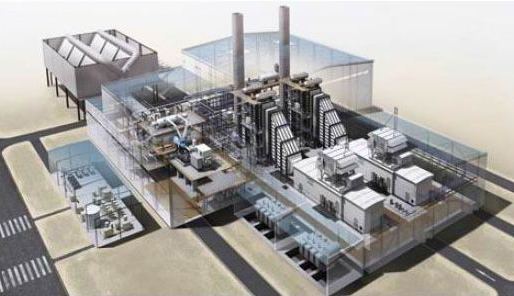
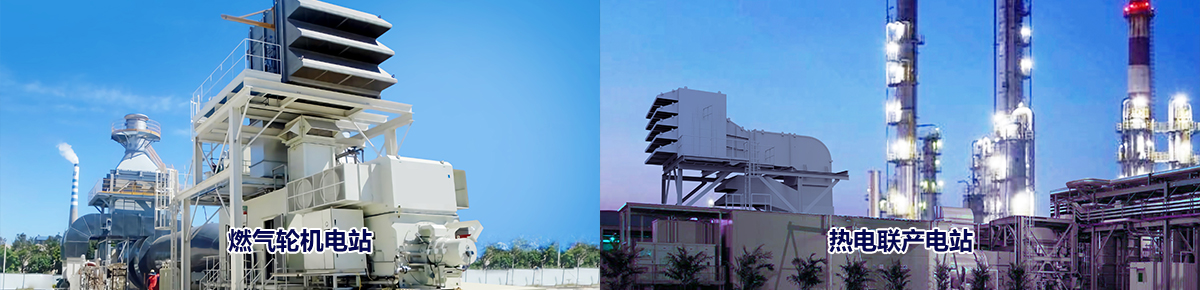
Layout design of gas turbine power plant
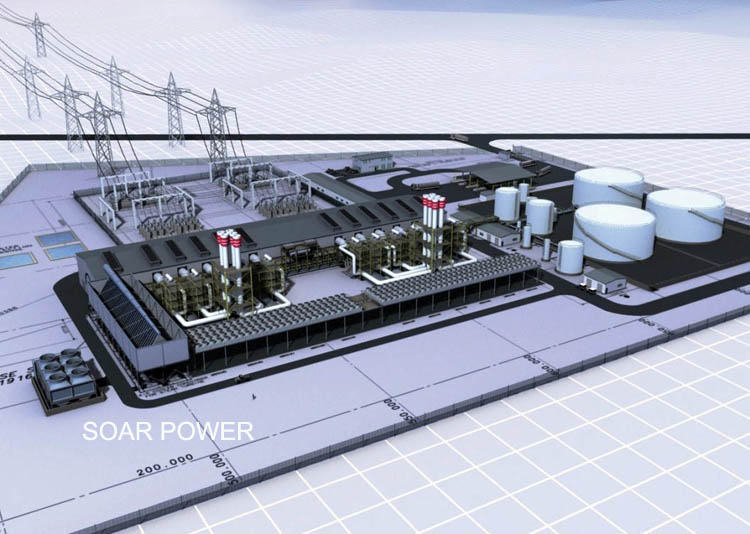
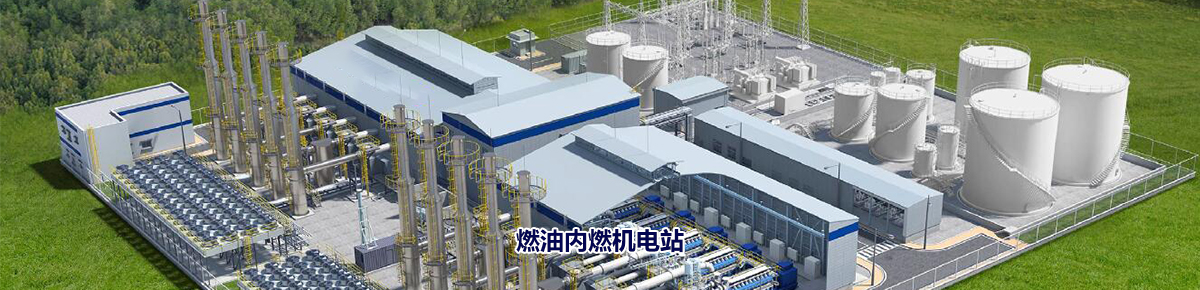
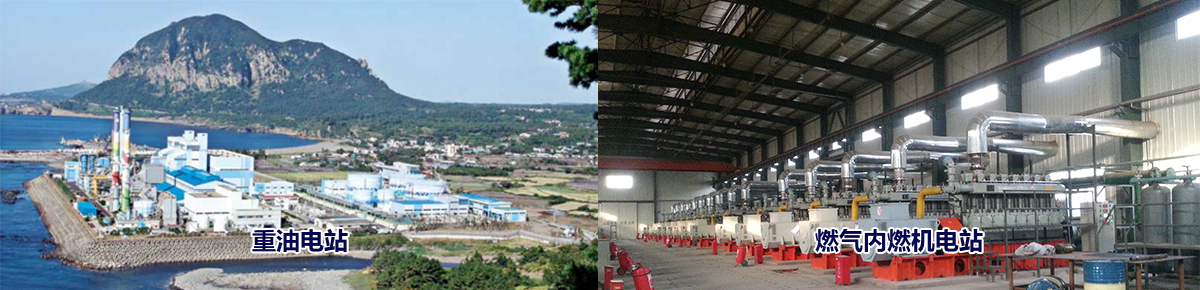
Layout design of HFO power plant
2. Plant Location and Site Configuration:
■ The location of the plant is the principal determination of the type of plant best configured to meet its needs. On site collection of data on site altitude, temperature and humidity, geological bearing capacity, and distribution of surrounding electricity load; Confirm the supporting conditions for fuel transportation and storage.
■ Other important parameters that govern the selection and location of the power plant are distance from transmission lines, location from fuel ports or fuel pipelines, and type of fuel availability. Site configuration is generally not a constraint. Periodically, sites are encountered where one plant configuration or another is best suited.
3. Installation Forms of Power Plants:
■ Stationary Power Plants, including Factory-style (Frame style) power plants and Containerized power plants.
■ Mobile Power Plants, including vehicle-mounted power plants and trailer mounted power plants.
■ Floating Power Plants, including power barges and offshore platform power plants. We can provide classification society certificates according to user requirements.
4.Configuration Types of Power Plants:
■ Simple Cycle Power Plants (SCPP), It is consist of a single or multiple gas turbine (or engine) driven generator sets.
■ Cogeneration Power Plants, also known as Combined Heat and Power (CHP).
■ Combined Cycle Power Plants (CCPP), refer to the Combined cycle power generation system composed of gas turbines, generators, boilers, steam or heating type steam turbine.
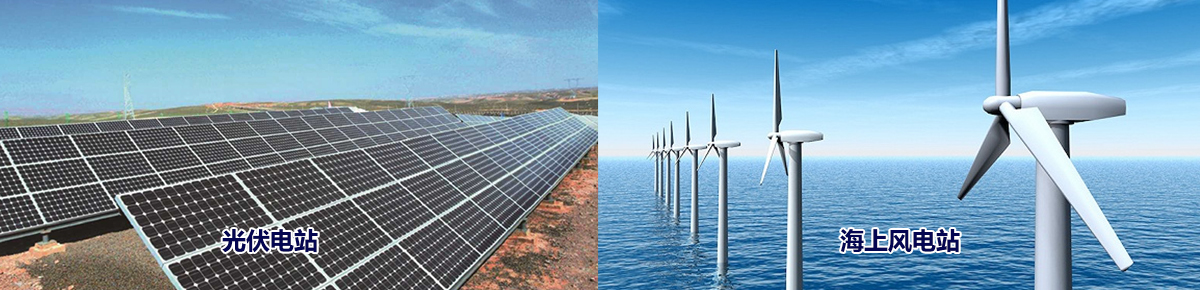
■ Hybrid Power Plant (HPP), refer to a kind of power generation system combining two types of energy, which common form is hybrid power generation combined by renewable energy sources (wind power, hydroelectricity, solar energy, ocean energy, etc.), and fossil power.
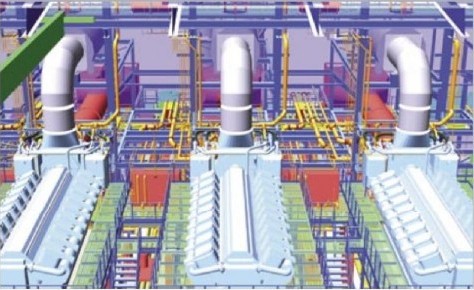
HFO power plant internal arrangement
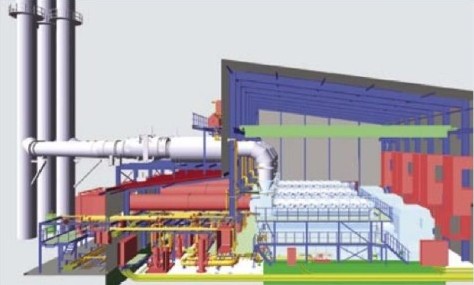
Installation design of power plant
5. Design of core system for Power Plants (Taking HFO power plant as an example):
■ Main gensets selection design: Priority should be given to specialized diesel engines suitable for high viscosity HFO, and generator sets selection should match the requirements of ISO 8528 standard. The steady-state voltage regulation rate and frequency fluctuation rate parameters of the sets should be determined according to the operating conditions.
■ Fuel oil system design: Set up a two-stage storage system consisting of the main fuel oil storage tanks and daily fuel oil tank, equipped with HFO pretreatment system (centrifuging, filtration, and heating) and oil-water separation treatment units. The pipeline is made of metal material and equipped with heat tracing and insulation devices. Install a safety shut-off valve at the refueling hose according to GB50156 specifications.
■ Layout design of Power house: The foundation of the gensets adopts reinforced concrete structure, with a thickness not less than 1.5 times the total weight of the sets, and maintenance passage of ≥ 1.2 m is reserved. The air inlet and exhaust systems of the machine room are independently set up, and supporting noise reduction, shock absorption, insulation and noise reduction facilities are provided.
■ Electrical system design: Design high/low voltage distribution circuits, configure black start, relay protection, grounding system, and reactive power compensation devices; Design a fully automatic parallel control system for multi sets scenarios to meet the requirements of dynamic load distribution.
■ Design of Environmental Protection Systems: If necessary, it can be equipped with flue gas desulfurization and denitrification, particulate matter capture devices, and oil containing sewage collection and treatment units. The emission indicators meet the requirements of local atmospheric and sewage discharge standards.
6. Design Service:
■ We accommodate your objectives.
The modular power plant design of our diesel allows individual detailed design with minimal planning and construction costs and the shortest possible construction time. Our idea is simple and convincing: Made-to-measure power plants consisting of standardized modules that are each compatible with one another. The resulting combinations cater for any and all the possible requirements of our customers. If your requirement cannot be met, we will develop a solution because we accommodate your objectives.
■ Down to the very last detail.
We plan every part of a power plant down to the very last detail and put together the appropriate modules. In the powerhouse, for example, you can determine even the smallest screw in the piping with us because you decide how your power plant should be equipped.